Inversión de escena
The Colectivo de Acciones de Arte (CADA) is a Chilean activist group of artists who used performance to challenge the Pinochet dictatorship in Chile. One of the most important contributors to the Escena Avanzada, CADA incorporated strategies of theatricality and performance as an essential element to all its art actions, while questioning the practices and institutions of all politics and conceiving art as a necessary social practice that eradicated the traditional distance between the artist and the spectator. Committed to the foundation of an open and spontaneous practice of spectatorship, their interventions in everyday life intended to interrupt and alter the normalized routines of the daily urban life of the citizen, by means of a semiotic subversion that decontextualized and semantically restructured urban behaviors, locations and signs. Hemispheric Institute of Performance and Politics
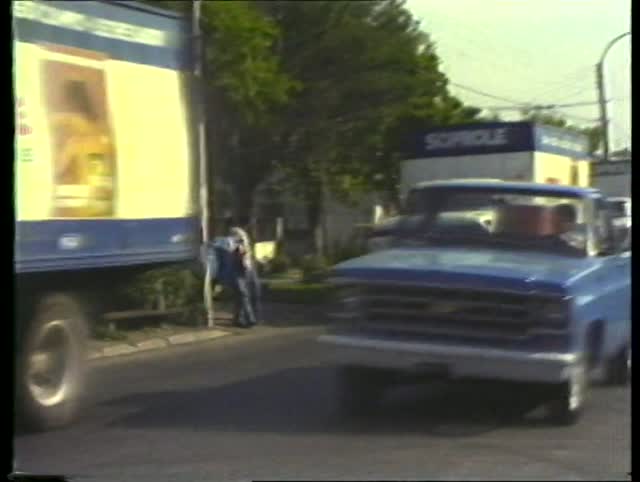
On October 17, 1979, eight milk trucks left the Soprole milk factory to drive through the city of Santiago according to a previously planned route, which ended at the National Museum of Fine Arts, where the trucks stood for hours forming a long line. The route symbolically connects a milk producing factory with a conservative 'art factory', the museum. This civil action sought to expose political violence, cultural censorship and human misery in a country threatened and under surveillance by Augusto Pinochet's dictatorship. The Museum was under the control of the dictatorship so the milk trucks worked as a critical reference to military technology and Pinochet's regime. Covering the facade of the Museum with a white cloth, CADA indicated that art was not inside the museum but outside, dispersed in the city, clandestine. Hemispheric Institute of Performance and Politics
Shown in this clip is video documentation of the performance, along with a text in Spanish: 'El arte es la ciudad y el cuerpo de los ciudadanos desnutridos' (Art is the city and the body of undernourished citizens). Hemispheric Institute of Performance and Politics